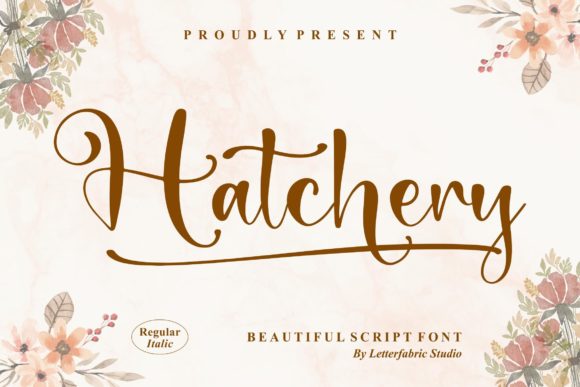
Discover Hatchery: The Dazzling Script Font for Modern Creators
More Than Just Pretty Letters
You know the feeling. You’re working on a project—a logo, a wedding invitation, a social media ad—and you need a font that feels personal, elegant, and full of character. Something that doesn’t just sit there but tells a story. That’s where a typeface like Hatchery enters the conversation. It’s not just another script font in a sea of options; it’s a meticulously crafted tool designed to inject a specific, high-end personality into your work. Think of it as the difference between a generic greeting card and one that feels hand-lettered by a friend with impeccable taste.
At its core, Hatchery is a dazzling script font. What does that mean in practical terms? It’s neat, not messy. It’s detailed, not simplistic. The letterforms have a fluid, connected flow that mimics natural handwriting but with a level of precision and consistency that’s hard to achieve manually. This balance is its superpower. It feels human and approachable, yet professional and polished. For designers, marketers, and entrepreneurs, this combination is gold. It allows you to create brand identity materials that feel authentic and trustworthy, avoiding the coldness of purely geometric sans serif fonts or the stuffiness of some traditional serif fonts.
Where This Creative Font Truly Shines
Understanding a font’s personality is one thing; knowing where to deploy it is another. Hatchery isn’t a one-size-fits-all solution, and that’s a strength. Its strength lies in specific applications where its modern typography flair can make the biggest impact.
For logo design, especially for businesses in the lifestyle, beauty, boutique, artisanal food, or wedding industries, Hatchery can become the cornerstone of a visual identity. It immediately communicates a sense of craftsmanship, care, and personal touch. Imagine it on a coffee shop’s branding, a florist’s business card, or a handmade soap label. It sets a mood before a single word of copy is read.
In editorial design and packaging design, its role often shifts to a supporting one, but a crucial one. Used for pull quotes, subheadlines, or featured product names in a magazine layout, it draws the eye and breaks up the monotony of body text. On packaging, it can highlight a key ingredient, a product name, or a brand slogan, adding a layer of sophistication and visual interest on the shelf. It’s a display font at heart, meant to be used in headlines and accents where its details can be appreciated.
The digital realm is another natural home. For social media graphics, Hatchery can help your posts stand out in a crowded feed. It’s perfect for quote images, promotional banners, or Instagram story headers that need to feel curated and intentional. For web design, use it sparingly but effectively—perhaps in a hero section headline or for special call-to-action buttons—to add a touch of elegance without compromising overall site readability. Remember, the key is contrast and hierarchy; pair it with a clean, legible sans serif font for body copy to ensure your message is both beautiful and accessible.
Practical Guidance for Using a Premium Font
Choosing a font like Hatchery is an investment, and like any design asset, it requires thoughtful implementation. Here’s how to get the most out of it.
First, evaluate project fit. Does your project’s tone align with the font’s elegant, detailed, and personal style? It’s perfect for projects targeting adults 20–50 who appreciate aesthetics and quality, but it might not be the right choice for a children’s toy brand or a gritty, industrial tech startup. Always consider your audience’s expectations.
Second, test font pairings rigorously. A dazzling script can overwhelm a page if not balanced. The classic rule of thumb works well: pair a decorative font like Hatchery with a neutral, highly readable serif font or sans serif font. For example, use Hatchery for a main headline, a simple sans serif like Lato or Open Sans for subheadings, and a clean serif like Merriweather or Georgia for body text. This creates a clear visual hierarchy and ensures your content is digestible.
Third, review the included styles. A well-made premium font often comes with more than just the basic alphabet. Hatchery is PUA encoded, which is a technical way of saying you can easily access all its glyphs and ligatures. These are the special character combinations and alternates that make the script look even more natural and fluid. In your design software, exploring the glyphs panel is essential to unlocking the font’s full potential and avoiding repetitive letter shapes.
Finally, consider readability and licensing. While stunning in headlines, avoid setting long paragraphs of body copy in any script font, including this one. It strains the eyes. Also, confirm the font’s license covers your intended use—whether it’s for personal projects, client work, or commercial products like merchandise. Most reputable font foundries make this clear, and respecting licensing is part of professional practice.
In the end, a typeface like Hatchery is a powerful tool in your creative arsenal. It’s not about using it everywhere, but about using it in the right places to add a layer of sophistication, personality, and human touch that resonates with your audience. When applied with intention, it doesn’t just display words; it elevates them.