Grunce Coasten: A Vintage Font Duo with Modern Appeal
Understanding the Grunce Coasten Typeface
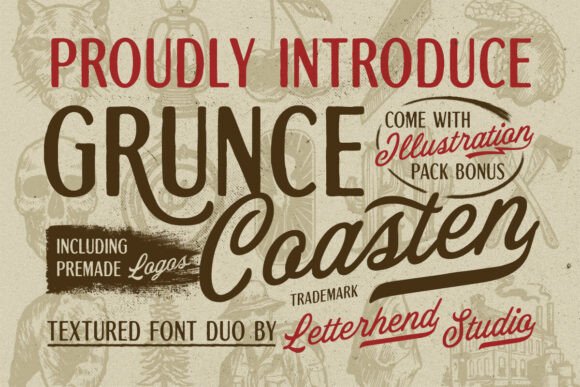
When you're working on a project that needs to feel both timeless and approachable, the right typeface makes all the difference. Grunce Coasten is a premium font duo that pairs a flowing script font with a clean sans serif font, creating a combination that carries a distinctly classic sensibility without feeling dated. The script component has that hand-lettered quality—slightly imperfect in the way that genuine vintage lettering tends to be—while the sans serif counterpart offers a structured, readable foundation that balances the personality of its partner.
What sets this duo apart is the bonus illustration set included with the package. These aren't random decorative elements. They're designed to complement the font's aesthetic, which means you can build cohesive visual compositions without hunting for separate design assets. For anyone managing a brand identity or assembling materials for a client, having a unified set like this saves real time and eliminates the guesswork of matching illustration styles to typography.
Where Grunce Coasten Shines in Real Projects
Let's talk about practical application, because that's what actually matters when you're choosing a creative font. Grunce Coasten works exceptionally well in logo design, particularly for brands that want to communicate heritage, craftsmanship, or a boutique sensibility. Think artisan bakeries, independent coffee roasters, boutique clothing labels, or wedding planners. The script element brings warmth and personality, while the sans serif grounds the design and keeps it functional at smaller sizes.
In packaging design, this font duo does something interesting. The script can carry the product name or a tagline with an elegant, handcrafted feel, while the sans serif handles the essential details—ingredients, instructions, legal information—without competing for attention. That visual hierarchy is something many designers struggle with, and Grunce Coasten makes it intuitive.
For editorial design and magazine layouts, the combination offers genuine versatility. The script works beautifully for pull quotes, section headers, or feature titles, adding a human touch to pages that might otherwise feel sterile. Meanwhile, the sans serif functions reliably for subheadings and shorter text blocks where readability is non-negotiable.
Here's a broader look at where this font pairing performs well:
- Wedding invitations and event stationery where elegance matters
- Branding materials for small businesses wanting a polished, approachable look
- Social media graphics where you need text to stand out in a crowded feed
- Book covers and interior chapter headings in publishing
- Signage for retail spaces, markets, and pop-up events
- Greeting cards, labels, and packaging for handmade or specialty products
- Restaurant menus, wine labels, and food branding
- Fashion lookbooks and beauty brand collateral
How Font Choice Shapes Audience Perception
Every typeface communicates something before a single word is read. That's not theory—it's something you see play out constantly in real-world brand identity work. When someone encounters Grunce Coasten on a product label or website header, the vintage-inspired script triggers associations with authenticity, care, and craftsmanship. The sans serif font companion reinforces reliability and modern professionalism. Together, they tell a story that feels both established and current.
This matters for readability too. A common mistake in design is choosing a beautiful script font and applying it everywhere. Script fonts, including the one in this duo, are meant for display purposes—headlines, logos, short phrases. They're not designed for body text. The sans serif component of Grunce Coasten handles the supporting role, maintaining visual hierarchy and ensuring your audience can actually absorb the information you're presenting.
Evaluating Whether Grunce Coasten Fits Your Project
Before committing to any commercial font, it's worth running through a few practical checks. Start by identifying the emotional tone your project needs. If you're aiming for something sleek and ultra-modern, a vintage-inspired script might create tension with your message. But if your project benefits from warmth, personality, or a handcrafted quality, Grunce Coasten is a strong candidate.
Test the font at the sizes you'll actually use. Pull up your layout file and swap in the typeface. Does the script remain legible at the size you need for your headline? Does the sans serif maintain clarity in smaller applications? These are the questions that separate a font that looks good in a specimen sheet from one that actually works in production.
Pay attention to the full character set and styles included. A well-built display font like this one typically includes alternates, ligatures, and stylistic variations that give you flexibility. Explore those options before settling on default letterforms. Sometimes a simple alternate for a single letter can transform the feel of an entire wordmark.
Pairing Beyond the Duo
While Grunce Coasten is designed to work as a self-contained system, you might need a third font for extended body copy in longer documents or web design projects. A neutral, highly readable serif or sans serif for paragraph text pairs well here without creating visual noise. The key is contrast without conflict. You want your supporting typeface to step back and let the Grunce Coasten duo carry the personality of the design.
Consider the licensing terms carefully if you're using the font for client work or commercial products. Most premium font licenses cover standard commercial use, but it's always worth confirming the specifics—especially if you're designing products for resale or working across multiple brand touchpoints.
Making the Most of the Included Illustrations
The bonus illustrations bundled with Grunce Coasten deserve attention. These assets extend the font's vintage character into visual elements you can use across packaging design, social posts, headers, and printed materials. Because they share the same design DNA as the typography, they create instant cohesion. Use them as standalone decorative elements, integrate them into logo lockups, or build pattern backgrounds for stationery and wrapping materials.
The practical advantage here is consistency. When your typography and illustration come from the same source, your brand identity feels intentional rather than assembled from mismatched pieces. That kind of visual coherence is something audiences notice, even when they can't articulate what makes a design feel professional.
Final Thoughts on Working with Grunce Coasten
Choosing a font is ultimately a design decision with business implications. The right typeface can elevate a small brand, make a publication feel more authoritative, or give a personal project the polish it deserves. Grunce Coasten offers a specific aesthetic—one rooted in vintage charm and balanced by modern structure—and it serves that aesthetic exceptionally well across a wide range of applications.
If your project calls for personality, warmth, and a touch of classic elegance, this font duo is worth serious consideration. Test it against your brief, explore the full character set, and see how it performs in your specific context. Good typography doesn't just look attractive. It communicates the right message to the right audience, and that's exactly where Grunce Coasten delivers.