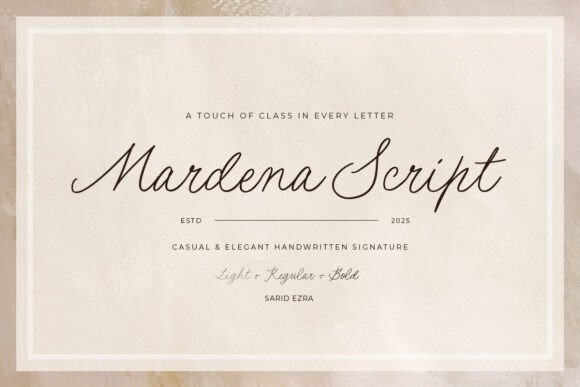
Mardena: A Modern Handwritten Script for Authentic Design
Finding a font that feels both personal and professional can be a real challenge. Many handwritten scripts lean too casual, appearing more like a quick note than a considered design element. Mardena solves this by offering a handwritten signature script that balances authentic, human warmth with a clean, minimalist aesthetic. It’s not trying to be overly decorative or distractingly ornate; instead, it provides a versatile tool for projects that need a touch of personality without sacrificing clarity.
At its core, Mardena is a premium font designed for practical use. Its character shapes flow naturally, mimicking the subtle variations and connected strokes of a real signature. The overall look is modern and uncluttered, making it far more legible than many competing script typefaces. This makes it an excellent creative font for designers who want to inject a human element into their work while maintaining a polished, professional feel. It supports multiple languages, which is a crucial feature for global brands and multilingual projects.
Understanding the Three Styles of Mardena
Mardena’s true versatility comes from its three included weights: Light, Regular, and Bold. Each style serves a distinct purpose in your design assets toolkit. The Light version is delicate and airy, perfect for subtle accents or secondary text where you don’t want the script to dominate. It works beautifully for short quotes or elegant invitations.
The Regular weight is the workhorse. It offers the ideal balance of presence and readability, making it the go-to choice for logotypes, hero text on websites, and prominent branding elements. It’s clear enough to be understood at a glance but retains all the handwritten charm. The Bold style adds significant impact and confidence. Use it for headlines that need to command attention, for monograms, or in packaging design where shelf presence is key. Having all three styles in one family ensures your brand identity remains consistent across different applications and hierarchies.
Where Mardena Truly Shines: Practical Applications
The strength of a font like Mardena is measured by how well it performs in the real world. For logo design, it’s a standout choice. A signature-style wordmark created with Mardena Regular or Bold can instantly communicate authenticity, craftsmanship, and a personal touch. This is invaluable for boutique businesses, personal brands, cafes, artists, and consultants. Pair it with a clean sans serif font for body text to create a dynamic and readable font pairing.
In editorial design and publishing, Mardena adds a layer of engagement. It can be used for chapter titles in a book, pull quotes in a magazine, or the title treatment for a blog series. Its handwritten nature draws the reader’s eye and creates a focal point, enhancing visual hierarchy. For web design, use it sparingly but effectively—perhaps for a call-to-action button, a featured product name, or an about-section signature to add a human face to your digital presence.
The applications extend into social media graphics and marketing materials. A testimonial graphic featuring a customer quote in Mardena Regular feels more genuine and trustworthy than the same text in a standard serif or sans serif. For wedding invitations, greeting cards, or any personal project, it delivers an elegant, handmade quality that pre-made digital fonts often lack. Its minimalist design ensures it complements rather than clashes with other elements, making it a reliable component in any designer’s library.
Making the Right Choice: Pairing and Readability
When you decide to use a script font like Mardena, context is everything. Its primary role is as a display font—meant for headlines, logos, and short bursts of impactful text. It is not designed for long paragraphs or small body copy, where its connected letterforms could reduce readability. The key is to use it strategically for emphasis.
A successful font pairing often involves combining Mardena with a highly legible, neutral typeface. A geometric sans serif font like Montserrat or Lato creates a modern, clean contrast. For a more traditional or sophisticated feel, pairing it with a transitional serif font like Georgia or Baskerville can work wonderfully. The goal is to let Mardena handle the personality while its partner font handles the information-heavy lifting. Always test your pairings at the intended size and in the actual context—on a mockup of your website, a sample of your business card, or a draft of your social post.
Evaluating Fit and Licensing for Your Project
Before committing, ask yourself if the font’s personality aligns with your project’s goals. Mardena is ideal for brands and projects that want to convey warmth, approachability, creativity, and a bespoke quality. It’s less suited for corporate environments that require a strictly formal or neutral tone. Review the full character set and language support to ensure it meets your specific needs.
As a commercial font, Mardena comes with a license. It’s essential to understand the terms of this license before purchasing. Typically, a standard license covers most uses, including logos, websites, and printed materials. However, if you plan to use the font in a product for sale—like a template, a physical good with the font embedded, or a mobile app—you may need an extended license. Always check the details provided by the font foundry or distributor to ensure compliance and avoid legal issues down the line.
In a landscape crowded with overly stylized or generic typefaces, Mardena offers a balanced solution. It provides the authenticity of a handwritten font with the polish and versatility of a well-crafted modern typography workhorse. By understanding its styles, testing its pairings, and applying it thoughtfully, you can leverage Mardena to create designs that are not only beautiful but also effective in communicating your unique message.